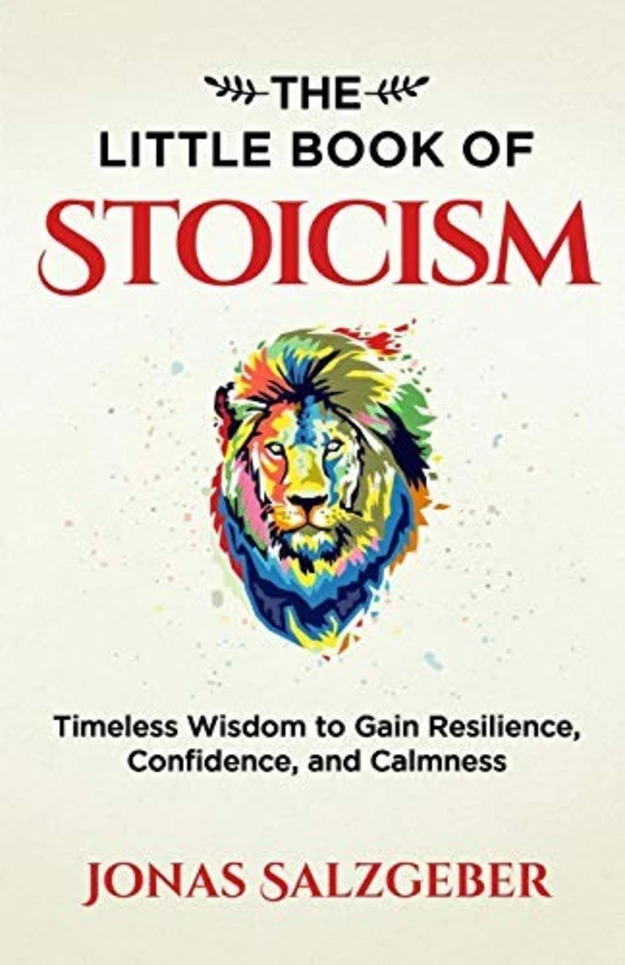
The Little Book of Stoicism
Timeless Wisdom to Gain Resilience, Confidence, and Calmness
Author: Jonas Salzgeber
Jonas Salzgeber’s The Little Book of Stoicism serves as an accessible and practical guide to applying ancient philosophy in modern life. This book excels at distilling complex Stoic concepts into actionable principles, making it a valuable read for both newcomers and those familiar with the philosophy.
The Central Principle: Living with Areté
The most powerful takeaway from the book is the emphasis on living with Areté, or virtue. This core concept provides a moral compass for navigating life. The book clearly outlines the four cardinal Stoic virtues, which form the foundation of Areté:
- 1. Wisdom (Prudent Deliberation)
- 2. Justice (Fairness and Integrity)
- 3. Courage (Facing fear and acting rightly)
- 4. Self-Discipline (Inner Control and resisting temptation)
It’s fascinating to note the parallels between these Stoic virtues and the four cardinal virtues emphasized in other traditions, such as the Freemason’s focus on Temperance, Fortitude, Prudence, and Justice. This similarity highlights the universal and enduring nature of these ethical principles.
Key Stoic Practices and Insights
A fundamental theme in the book is the Dichotomy of Control, which teaches readers to focus their energy solely on the things within their power—their thoughts, judgments, and actions—and to accept the rest. This shift in perspective is crucial for finding peace and reducing anxiety.
Salzgeber powerfully reinforces the need to approach life’s challenges with equanimity. This concept, derived from the Latin roots aequus (“equal”) and animus (“mind”), truly means even-mindedness. This inner stability is presented as a powerful defense against adversity, allowing one to respond thoughtfully rather than react emotionally.
Among the 55 Stoic Practices the author elaborates on, one particularly effective tool is taking a “Birds Eye View” or “View from the Top.” This practice encourages readers to mentally step back and see their problems from a larger, perhaps cosmic, perspective. This shift in scale instantly diminishes the perceived size and urgency of daily troubles, fostering a more confident and proportionate approach to problem-solving.
Final Assessment
While the section listing the 55 practices can feel verbose, it is also the book’s strength. The breadth of content ensures that every reader, regardless of their current life stage or specific struggles, will find several practices that resonate deeply and offer immediate, practical value.
The Little Book of Stoicism is a powerful reminder to live life to the fullest with Areté and to approach adversity with the serene, steady mind of equanimity.